
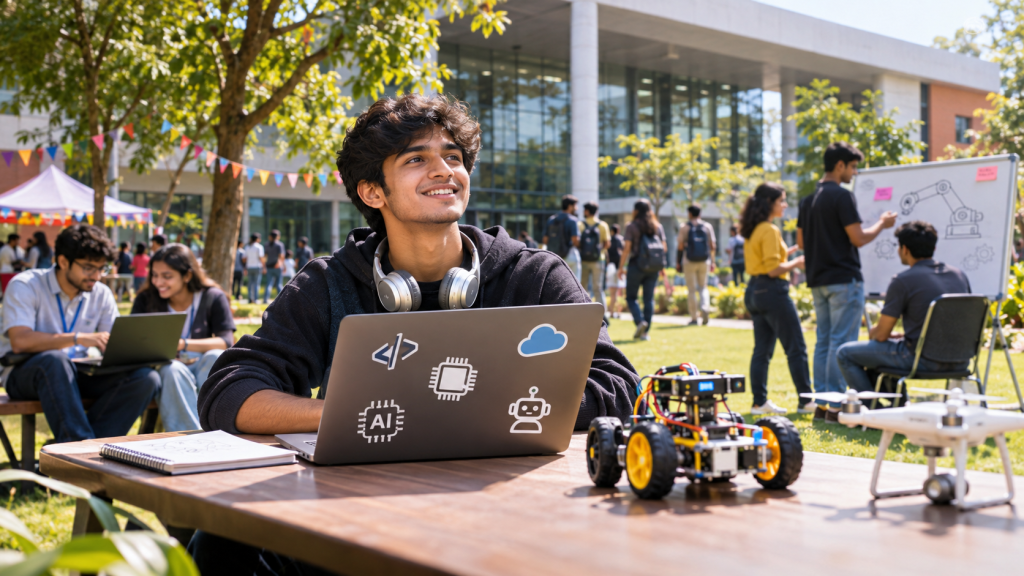
Artificial intelligence is changing the way technology companies develop products, manage software and approach engineering problems. As AI becomes increasingly integrated into everyday business operations, the expectations placed on engineering graduates are also changing. This shift is prompting students to reconsider what an undergraduate engineering degree should prepare them for.
For years, IITs and other reputed engineering institutions dominated student preferences. JEE ranks, placement records and institutional reputation played a major role in college selection. However, the growing demand for AI-related skills is bringing other factors into consideration. Students are paying greater attention to curriculum relevance, practical learning and opportunities to work with emerging technologies.
How Artificial Intelligence Is Reshaping the Skills Engineers Need
Artificial intelligence is changing the responsibilities associated with engineering roles, particularly at the entry level. Tasks such as routine coding, debugging and basic software development are increasingly supported by AI-powered tools. Consequently, employers are looking for graduates who can go beyond writing code and demonstrate stronger problem-solving, system design and critical thinking abilities.
A recent analysis of how AI is slowing junior tech hiring and raising the bar for engineering graduates in India examines the growing disconnect between conventional engineering education and changing industry requirements.
This development raises questions about whether existing engineering programmes are preparing students for the demands of an AI-driven workplace.
Teaching artificial intelligence as an optional subject may not adequately address this gap. Engineering students need exposure to programming, machine learning, generative AI and practical software development throughout their undergraduate education. Working on real-world problems should become part of the learning process rather than being limited to internships and final-year assignments.
Why College Reputation Is No Longer the Only Factor in Engineering Admissions
The changing requirements of technology employers are influencing how students assess engineering institutions. Although college reputation and academic rankings continue to hold importance, they are no longer the only considerations in every admission decision.
Students are also examining the academic experience, technical exposure and opportunities available during their undergraduate years. This has brought specialised technology institutions into the conversation.
A recent report examining why students with international university offers and strong JEE scores are choosing Polaris School of Technology over Ivy League colleges illustrates this through the experiences of three students from various academic backgrounds.
Their decisions demonstrate how learning opportunities and practical exposure can influence individual college choices alongside institutional reputation.
At Polaris School of Technology (PST), Bengaluru, the undergraduate learning approach includes an AI-driven curriculum, hands-on coding, hackathons, entrepreneurship and industry engagement from the early stages of education. This reflects an approach to engineering education that places greater emphasis on building technology and applying theoretical knowledge.
For students exploring the best engineering colleges beyond IITs, curriculum design, mentorship, practical experience and industry connections are becoming important considerations.
The Shift Towards AI-First Engineering Education in India
The emergence of AI-first undergraduate programmes is another development reshaping engineering education in India. These programmes are moving beyond conventional computer science structures by introducing artificial intelligence and contemporary technology skills into undergraduate learning from the beginning.
Earlier, students who could not secure admission to IIT computer science programmes often evaluated their alternatives through conventional engineering branches and institutional rankings. Specialised technology programmes are now expanding the choices available to students interested in AI and software development.
As discussed in how AI-first undergraduate programmes are opening new pathways for students who did not secure IIT CSE, these programmes are introducing alternative routes into technology education.
Polaris School of Technology is among the institutions associated with this emerging approach. Its educational model emphasises programming, machine learning, AI applications, open-source contributions and industry-oriented projects.
The objective is to prepare students to understand emerging technologies and apply their knowledge to develop products and address practical problems.
Key Factors to Evaluate When Choosing an Engineering College
As engineering education responds to changing industry requirements, students and parents need to assess colleges through more than admission cut-offs and rankings.
Some important considerations include:
- AI-first curriculum: Does the programme include artificial intelligence, machine learning and emerging technologies in its core curriculum?
- Hands-on coding experience: Can students develop software and work on technical projects from the first semester?
- Industry exposure: Does the programme include internships, industry projects and practical assignments?
- Mentorship: Are students guided by technology professionals, founders and experienced engineers?
- Innovation and entrepreneurship: Does the institution encourage experimentation, product development and startup exploration?
These factors can help students understand how effectively an institution connects academic learning with practical technology applications.
The future of engineering education in India will depend on how well colleges respond to evolving industry expectations. As artificial intelligence changes technology careers, students will need more than theoretical knowledge. Their ability to develop products, solve engineering problems and work with emerging technologies will increasingly influence the value of their education. The choice of an engineering college is therefore becoming a decision about the technical skills students want to develop and not the degree it offers.